
West African Nation Prepares for Presidential Vote Following December Coup Attempt
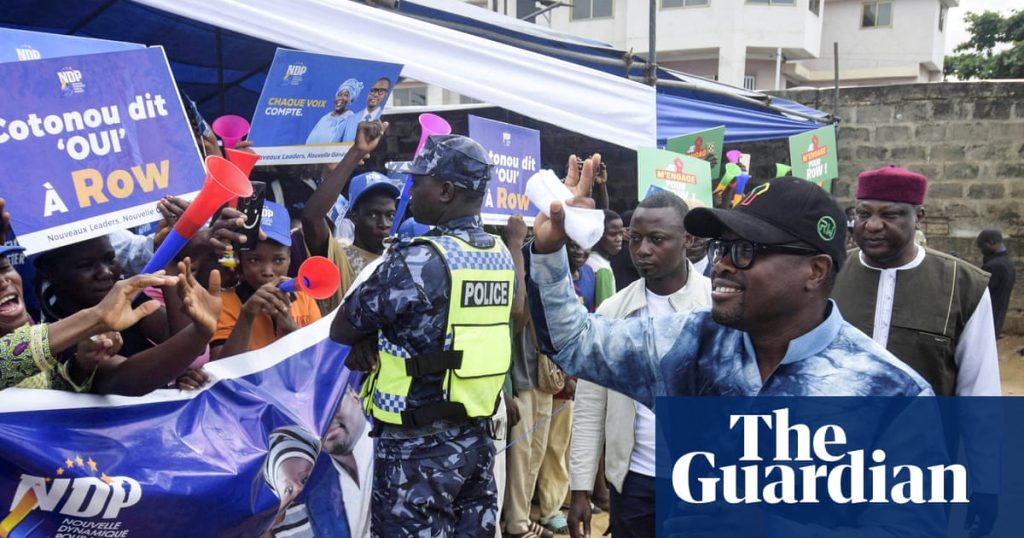
The West African nation of Benin is set to conduct its presidential election this Sunday, merely four months after experiencing an unsuccessful military coup attempt. The electoral process appears heavily skewed toward one candidate, raising questions about democratic competition in the region.
Current President Patrice Talon, who assumed office in 2016, cannot seek reelection after completing his maximum two five-year terms. However, recent constitutional changes have extended future presidential terms to seven years, with winners eligible for two consecutive periods in office.
Finance Minister Romuald Wadagni has emerged as the clear frontrunner, having been selected as the ruling coalition’s nominee without undergoing primary elections. Political analysts suggest that potential rivals were systematically eliminated from contention through various means, clearing Wadagni’s path to victory.
The 49-year-old candidate, who gained extensive experience as a technocrat in the United States and speaks fluent English, is credited with maintaining the country’s fiscal stability during the current administration. His campaign promises include implementing free education and creating additional employment opportunities, particularly appealing to young voters who comprise over half the population.
Should Wadagni win, he would join the ranks of Africa’s youngest leaders, contrasting sharply with the continent’s average presidential age of 65 years. The region is notably home to some of the world’s longest-serving leaders, including Cameroon’s Paul Biya at 93 and Equatorial Guinea’s Teodoro Obiang Nguema at 83.
A successful democratic transition would distinguish Benin from its regional neighbors, where at least three countries are currently under military rule. However, critics argue that the outgoing administration has exhibited authoritarian tendencies, suppressing opposition voices despite visible infrastructure development.
The December coup attempt reportedly stemmed from military dissatisfaction and growing concerns about jihadist incursions along the borders with Burkina Faso, Niger, and Nigeria. These security challenges have contributed to regional instability and military interventions across West Africa.
Press freedom has deteriorated significantly, with several newspapers facing indefinite closure after publishing government criticism. Journalist Hugues Sossoukpè, who fled to Togo in 2021, was arrested by security agents in Ivory Coast last July and remains imprisoned, labeled as a dangerous cyber-activist promoting terrorism.
Human rights organizations have documented the shrinking civic space, noting continued attacks on independent media and arbitrary detention of dissidents. Women and marginalized communities face ongoing discrimination, while forced evictions threaten thousands of residents’ fundamental rights.
Electoral reforms implemented in 2024 have raised concerns about the country becoming a single-party state. New regulations require political parties to secure at least 10% of votes for parliamentary representation, while presidential candidates must obtain endorsements from 15% of mayors and legislators. These changes enabled the ruling coalition to capture all 109 parliamentary seats in January’s legislative elections.
Voter turnout for the January parliamentary poll reached only 36% of the 7.8 million registered voters, raising concerns about similar apathy in the upcoming presidential race. The main opposition candidate is Paul Hounkpè, former culture minister representing the Cowry Forces for an Emerging Benin party, though he is widely viewed as a token challenger.
The primary opposition party, the Democrats, failed to meet candidacy requirements and will not field any candidates. While stopping short of calling for an electoral boycott, the party has refused to endorse any candidate and suspended nearly two dozen members for allegedly supporting the ruling coalition.
Opposition leaders have characterized the electoral process as systematically designed to exclude serious challengers, describing their disqualification as programmed exclusion that undermines democratic principles.