
UK Government Embraces Chinese Vehicle Imports Despite Industry Concerns
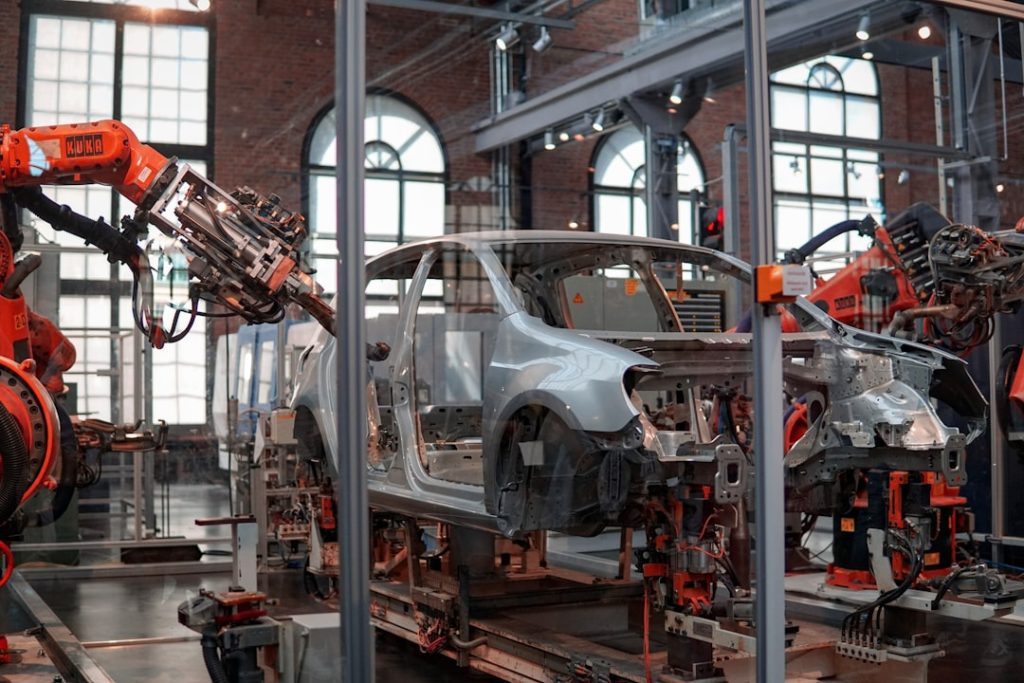
In the rolling countryside of Somerset, where construction cranes tower against the backdrop of nuclear facilities and ancient landmarks, Britain is building what officials hope will secure the nation’s automotive future. The massive industrial site, spanning an area equivalent to thirty football fields, represents a critical investment in the country’s electric vehicle infrastructure.
This location will soon house the UK’s largest battery manufacturing facility, operated by Agratas and funded through India’s Tata Group with a £5 billion investment. The plant will produce battery cells for electric vehicles, particularly supporting Jaguar Land Rover’s transition to electric mobility.
The facility’s importance has become more pronounced following recent market developments that have surprised industry observers. For the first time in British automotive history, a Chinese vehicle – the Jaecoo 7 – claimed the top sales position in the UK market. This medium-sized SUV, available in both petrol and hybrid variants, represents a broader trend of Chinese automotive penetration.
The statistics reveal a dramatic shift in consumer preferences and market dynamics. Chinese-owned automotive brands now account for approximately 15% of new vehicle sales in Britain as of 2026, a remarkable increase from just 1.3% five years earlier. This growth has been particularly pronounced in the electric vehicle segment.
Business Secretary Peter Kyle, speaking during a recent visit to the Somerset facility where he announced an additional £380 million government grant, expressed a notably relaxed stance toward these market changes. His position reflects the government’s broader strategy of remaining open to international competition while supporting domestic manufacturing capabilities.

Kyle emphasized that British consumers should maintain access to vehicles of their choosing, while government oversight would focus on identifying any unfair trade practices. He also highlighted potential opportunities for Chinese manufacturers to establish production facilities within the UK, drawing parallels to Japan’s successful automotive investment in Britain during the 1990s.
However, this approach faces significant criticism from various political quarters. Opposition figures argue that government regulations pushing consumers away from traditional fuel vehicles have inadvertently benefited foreign electric vehicle imports at the expense of domestic manufacturers.
The automotive sector has experienced considerable challenges, with UK vehicle production declining by half over the past decade. Critics point to what they perceive as unfair competitive advantages enjoyed by Chinese manufacturers, calling for protective measures including tariffs and import quotas.
Britain’s approach contrasts sharply with other major economies. Both the European Union and United States have implemented tariffs on Chinese automotive imports, while the UK has deliberately chosen not to follow this path. This decision has enabled Chinese companies to invest heavily in British distribution networks and marketing campaigns, accelerating their market penetration.
Some international allies have adopted similar strategies. Canada recently reduced additional tariffs on certain Chinese electric vehicles, while Spain has actively courted Chinese electric vehicle manufacturers, successfully attracting major factory investments.

Industry representatives acknowledge the competitive reality facing British manufacturers. Mike Hawes, representing the Society of Motor Manufacturers and Traders, notes that Chinese companies are succeeding because they offer consumers attractive products with competitive pricing, advanced technology, and reliable build quality.
The Somerset battery facility represents Britain’s strategic response to this competitive challenge. As Chinese companies demonstrate increasingly rapid charging capabilities that rival traditional refueling times, Agratas officials emphasize their commitment to cutting-edge research and development to maintain technological competitiveness.
The facility offers additional strategic advantages, particularly for export markets. With domestic battery production, British manufacturers can continue accessing markets where Chinese products face restrictions, maintaining important trade relationships during a period of shifting geopolitical dynamics.
Economic resilience in the current environment requires balancing technological advancement with navigation of complex international relationships. The Somerset site’s history illustrates these challenges – it was once considered for a Tesla facility before that company chose Berlin, citing Brexit-related concerns.
Despite these complexities, the UK appears positioned to benefit from its openness to Chinese automotive investment and imports. While this strategy involves dependence on foreign expertise and capital, it also places Britain ahead of other major economies in adapting to the rise of the world’s largest vehicle exporter. Industry observers suggest this transformation has only just begun, with significant implications for global automotive markets.
Photo by Lenny Kuhne on Unsplash
Photo by Arnaud Padallé on Unsplash