
UK Government Embraces Chinese Vehicle Imports Despite Industry Concerns
In the rolling countryside of Somerset, where construction cranes tower against the backdrop of nuclear facilities and ancient landmarks, Britain’s automotive future is taking shape. A massive industrial site spanning thirty football fields represents more than just infrastructure—it symbolizes the nation’s strategy for economic resilience during turbulent global times.
The sprawling construction zone, currently a maze of steel frameworks and heavy machinery, will soon transform into Britain’s largest battery manufacturing facility. This gigafactory will produce electric vehicle battery cells, marking a crucial milestone for domestic automotive production.
This £5 billion investment from India’s Tata Group represents both a policy victory and an essential step toward securing Britain’s automotive manufacturing future. The facility addresses urgent needs as the sector faces unprecedented challenges from international competition.
Recent market data revealed a significant milestone: a Chinese vehicle model topped UK sales charts for the first time in history. The medium-sized SUV, available in petrol and hybrid variants, signals a dramatic shift in consumer preferences and market dynamics.
Rapid Market Transformation
Chinese-owned automotive brands now capture approximately 15% of new vehicle sales in Britain, a remarkable surge from just 1.3% five years earlier. This growth primarily stems from electric vehicle imports, fundamentally altering the competitive landscape.
Business Secretary Peter Kyle recently visited the Somerset facility to announce a £380 million government grant, coinciding with news of Chinese market dominance. His response to this development reflects official policy: Britain should embrace rather than fear international competition.

Kyle emphasized consumer choice, stating his reluctance to restrict access to vehicles buyers prefer. While monitoring potential trade distortions, he highlighted opportunities for employment and investment from Chinese manufacturers expressing interest in establishing UK operations.
Drawing parallels to Japanese automotive expansion in the 1990s, Kyle suggested similar benefits could emerge from Chinese investment, provided appropriate conditions exist.
Industry Challenges and Political Responses
However, domestic production has declined significantly, falling by half over the past decade. Concerns persist regarding competitive viability, data security, and national security implications of increased foreign automotive presence.
Opposition politicians attribute sector decline to government regulations transitioning consumers away from traditional fuel sources. Critics argue these policies undermine domestic manufacturers while facilitating imported electric vehicle penetration.
Some political figures advocate for protective measures, suggesting tariffs and quotas to shield domestic employment from what they characterize as unfair international competition.
International Approaches
The European Union and United States have implemented tariffs on Chinese automotive imports. Britain’s decision to maintain open markets has partly enabled rapid Chinese market penetration, prompting increased investment in dealer networks and marketing infrastructure.

Other developed nations have adopted varying strategies. Canada has adjusted tariff policies on certain electric vehicles, while Spain has welcomed Chinese manufacturing leadership, attracting substantial factory investments.
Industry representatives note Britain’s historically open automotive market and acknowledge Chinese companies’ rapid adaptation. Success stems partly from offering consumers attractive products featuring competitive pricing, advanced technology, and quality construction.
Future Competitiveness
The Somerset facility represents Britain’s competitive response to international challenges. As Chinese companies develop rapid charging capabilities rivaling traditional refueling times, domestic research aims to match technological frontiers in battery development.
Strategic advantages include maintaining export capabilities to markets where Chinese presence remains limited, particularly the United States, through domestically produced battery solutions.
Economic resilience requires navigating both technological advancement and shifting geopolitical dynamics. The site’s history illustrates these complexities—previously considered for a major American electric vehicle manufacturer’s European operations before Brexit influenced the final decision toward continental Europe.
Britain’s approach emphasizes domestic supply chain development while maintaining openness to foreign expertise and investment. This strategy positions the nation advantageously among developed countries regarding the world’s largest automotive exporter, whose global influence continues expanding rapidly.
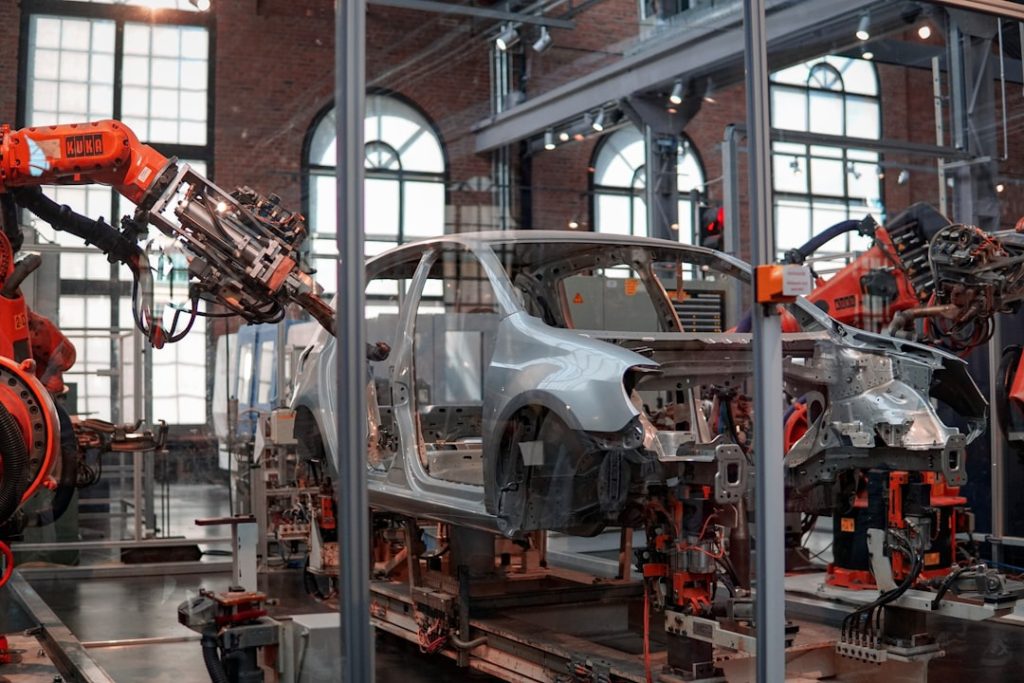
Photo by Lenny Kuhne on Unsplash
Photo by Iyan Ryan on Unsplash
Photo by Homa Appliances on Unsplash