
Transform Your Social Media Experience with RSS Feed Integration
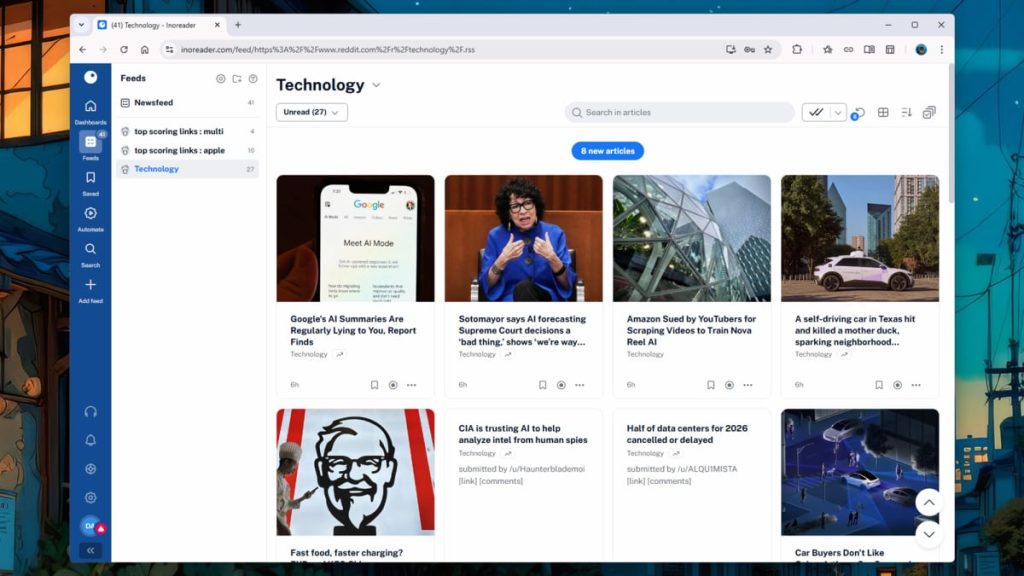
Many users recognize that popular discussion platforms can serve as valuable sources of information and diverse perspectives, while RSS (Really Simple Syndication) offers a streamlined approach to monitoring web content. However, few realize these two powerful tools can be effectively combined for an enhanced content consumption experience.
Major social discussion platforms actually incorporate various RSS integration features, allowing users to direct their RSS readers toward specific communities and stay current with the latest posts. This approach delivers all the standard RSS advantages: a clean, customizable interface without advertisements or distracting elements, allowing you to consume content at your preferred pace.
For newcomers to RSS technology, numerous high-quality client applications are available to help you get started. These RSS applications provide continuous, chronological feeds from any websites you select, enabling you to digest content according to your own schedule and preferences.
Setting Up Social Platform RSS Feeds
Converting any community forum into an RSS feed is remarkably simple—just append “.rss” to the end of the community URL. For instance, a technology discussion community would transform from its standard web address to include the RSS extension. This creates a straightforward, reverse-chronological feed displaying the newest submissions at the top.
The same principle applies to comment feeds and user profiles: simply add “.rss” to the end of any URL. If you want to monitor all comments within a specific community, the comments section URL with the RSS extension would provide the appropriate feed for your chosen RSS reader.
This “.rss” technique works with numerous platform URLs, though placement varies depending on the specific page type. For tracking particular search terms, you can construct URLs that return all posts matching your keywords, sorted by recency or other criteria.
These feeds function identically to any other RSS feed in your client application—you can search through them, bookmark favorites, and follow links to read complete posts on the original platform, including embedded media and community discussions.
Some RSS readers include specialized features for social platforms. Leading RSS clients often provide dedicated integration tabs where you can add communities and searches directly, eliminating the need for manual URL manipulation.
Advanced RSS Feed Customization
Deeper exploration reveals additional techniques for enhancing your RSS experience with social platforms. You can incorporate various parameters into your URLs: “sort” for organizing posts, “t” for specifying time periods, and “limit” for restricting the number of retrieved posts.
For example, constructing a URL with top posts from a technology community for the current day, limited to 10 entries, provides a focused feed of the most popular recent content. However, be aware that this might occasionally produce duplicates if posts maintain their top positions across multiple feed updates.
Combining multiple communities is also achievable: creating URLs that merge feeds from different discussion groups allows you to monitor several related topics simultaneously. This proves particularly useful for staying informed about platform activity without manually checking each individual community.
Some experimentation may be required, as RSS support tends to evolve over time. Certain general feed URLs may pull trending content from the platform’s main page, though results can vary in scope and consistency.
For users seeking greater customization, additional tools are available. Automation services like IFTTT enable the creation of custom social platform feeds that convert to RSS format, while specialized tools allow feed customization based on keywords, timing, engagement metrics, and other criteria—though some may require technical setup on personal servers.