
How ‘Boyfriend on Demand’ Chose Hope Over Dystopia in Its AI Romance Story
Warning: This article contains spoilers for Boyfriend on Demand.
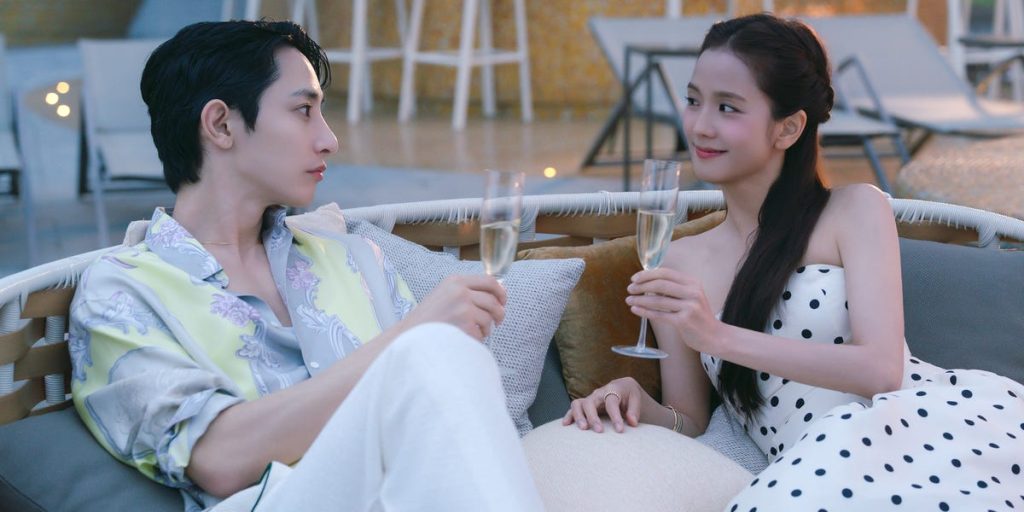
Netflix’s latest series ‘Boyfriend on Demand’ explores artificial intelligence in dating without falling into the typical doom-and-gloom narrative. The ten-episode drama centers on Seo Mi-rae, a webtoon producer portrayed by Blackpink’s Jisoo, who becomes a trial user for an innovative virtual reality dating platform. This subscription-based service allows users to experience romantic storylines with various AI companions, attracting South Korean women frustrated with contemporary dating culture.
Initially, Mi-rae approaches the platform with skepticism and shows little interest in romance, influenced by a difficult past relationship and her demanding career working alongside the challenging webtoon creator Yun Song. Her friend Ji-yeon encourages her to socialize more while dealing with her own dating exhaustion. However, Mi-rae unexpectedly develops feelings for her attractive colleague Park Kyeong-nam at work.
Debut screenwriter Namgung Do-young deliberately avoided portraying the technology company DU as antagonistic, unlike other productions such as ‘Black Mirror’s’ ‘Hang the DJ’ or the recent film ‘Companion.’ Instead of making the corporation the enemy, Namgung focused on a different central conflict.
According to the writer, the real villain in the story is Mi-rae’s internal fear rather than the technology itself. While AI advancement could potentially threaten human relationships, Namgung believes fear represents the primary barrier people must overcome in life.
Three main characters—Mi-rae, Ji-yeon, and Yun Song—all secretly use the platform without revealing this to each other. Namgung designed their individual storylines to represent distinct categories of single people: those avoiding dating entirely, those actively pursuing relationships, and those wanting romance but facing obstacles. The writer completed the script before AI became widely mainstream, making the series remarkably timely as AI companions gain popularity, dating fatigue increases among young adults, and mental health concerns about AI relationships grow.
A Nuanced Approach to Technology and Romance
When asked about the message regarding AI dating, Namgung explained that while the virtual boyfriend service might seem controversial by commercializing romantic feelings, the protagonist never loses her sense of self. Mi-rae occasionally becomes deeply immersed in virtual relationships but maintains awareness of reality and her identity.
The writer emphasized that many AI-human relationship stories feel dystopian because characters become overly dependent on technology or lose touch with reality. Mi-rae’s protective attitude toward her personal time helps her balance daily life with virtual experiences, contributing to the series’ lighter tone.
Namgung stressed that regardless of whether relationships involve AI partners, people attach personal meaning to romance. The quality of relationships cannot be easily categorized, but maintaining one’s identity within any relationship remains crucial for sustainability and fulfillment.
Three Different Perspectives on Modern Dating
The three female protagonists represent different approaches to contemporary romance. Mi-rae discovers her fear of change through the virtual service while learning to embrace transformation through real-world interactions with Kyeong-nam. Ji-yeon, who actively pursues dating, feels liberated from societal judgment about being ‘too focused on men’ when using virtual reality. Yun Song, a hardworking artist who sacrifices her health for others’ fantasies while remaining lonely, finds the service serves as a lifeline.
Namgung describes the platform as functioning differently for each character: a self-reflective mirror for Mi-rae, freedom for Ji-yeon, and essential support for Yun Song.
Cultural Context and Social Attitudes
All three women conceal their platform usage, and the technology remains somewhat taboo despite its popularity. Male characters generally view it negatively, though Park Kyeong-nam shows understanding in the final episode. Namgung initially considered having the women reveal their usage to each other and even wrote such a scene, but ultimately removed it to focus on Mi-rae and Kyeong-nam’s relationship.
The secrecy reflects Korean cultural tendencies toward privacy about personal preferences. Despite Korea’s increasing openness, many people remain uncomfortable sharing intimate details unless feeling completely safe. This has led to the dictionary term ‘il-co,’ meaning ‘passing as a regular person,’ used by those hiding interests like K-pop fandom, dating app usage, or matchmaking services.
Selective Storytelling Choices
Facing the complexity of modern dating issues and AI’s implications, Namgung found inspiration in Deborah Levy’s ‘The Cost of Living,’ particularly the line: ‘To separate from love is to live a risk-free life. What’s the point of that sort of life?’ This guided the decision to focus on a woman afraid of romantic risks, with virtual partners serving as supportive tools for learning.
The virtual boyfriends Mi-rae encounters were designed to reflect her feelings—one reminds her of her past relationship’s beginning, another of its end. All experiences were tailored to her needs, highlighting how algorithms shape AI dating universes based on users’ unconscious desires.
Despite the subscription-based nature of the service, Namgung avoided exploring the darker aspects of the subscription economy, such as financial struggles or tiered service quality based on payment levels. Including boyfriends who behave differently depending on subscription fees would have made the story too dystopian and shifted focus from the intended themes.
Fear as the True Antagonist
Rather than portraying DU as villainous, Namgung positioned Mi-rae’s fear as the primary obstacle. The final AI boyfriend, Gu Yeong-il, who attempts to manipulate Mi-rae using her breakup anxieties, represents her deepest fears. Their conversations essentially show Mi-rae confronting herself.
Making DU antagonistic would have added unnecessary genre elements beyond Mi-rae’s emotional journey and personal growth. By keeping the company’s presence minimal, Namgung directed attention to what she considered the most important theme.
Future Possibilities
If granted a second season, Namgung envisions a much more advanced Boyfriend on Demand service, reflecting AI technology’s rapid development and changing public attitudes. While people initially felt nebulous fear about AI advancement, they now seem more determined to leverage the technology effectively.
A continuation would explore how people form, maintain, and end relationships amid massive technological change. The writer hopes viewers find joy in the series and appreciates the collaborative discussions that shaped the final product.