
A Century and a Half Later: The Enduring Quest for Human Connection Through Technology
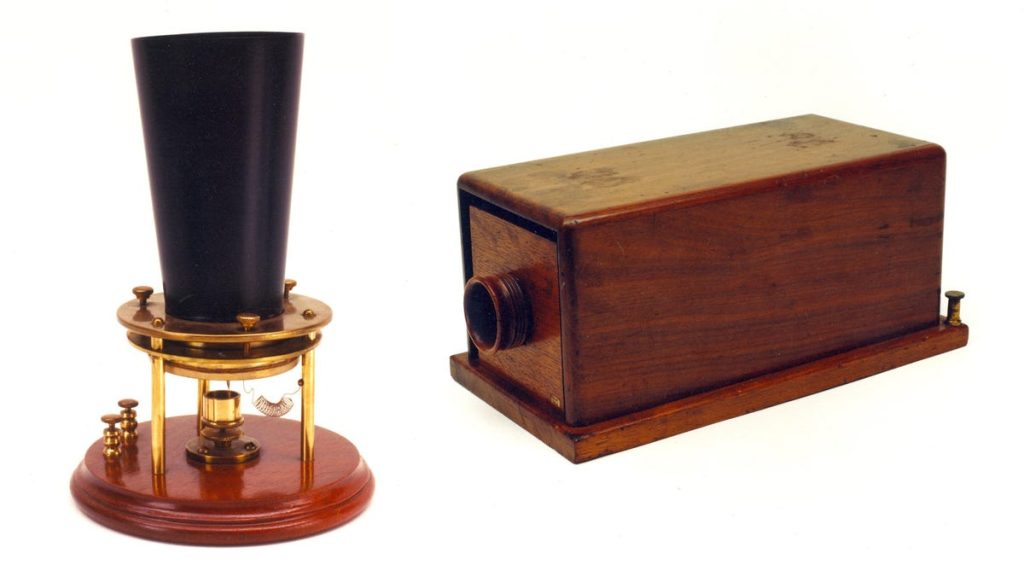
A conversation with William Caughlin from AT&T’s Archives and History Center began with a technological hiccup that seemed perfectly suited to our discussion. When our video conference platform malfunctioned, we resorted to a traditional voice call – an appropriate beginning for a dialogue about the milestone anniversary of telephonic communication.
March 10, 2026, marks exactly 150 years since Alexander Graham Bell uttered his historic words to his colleague Thomas Watson: “Mr. Watson, come here, I want you.” This simple phrase traveled through a copper wire to an adjacent room, establishing the foundation for modern telecommunications. While the underlying technology has undergone revolutionary changes, the fundamental purpose remains unchanged: enabling real-time conversation between people in separate locations.
According to Caughlin, Bell had been conducting experiments for twelve months prior to this breakthrough. Throughout 1875, he successfully transmitted vocal sounds via copper wire, though the results were unintelligible. Watson could detect noise and sound patterns, but couldn’t decipher Bell’s actual words. However, these early attempts confirmed Bell was progressing in the right direction, ultimately leading to the clear transmission achieved on that pivotal March day.
Historical Treasures and Innovation Legacy
To commemorate this telecommunications milestone, AT&T established a temporary exhibition at its Dallas corporate campus, welcoming visitors through March 12. The display featured remarkable artifacts from that groundbreaking moment 150 years ago, including the actual copper wire that carried Bell’s message, which was later preserved in a glass case with loose coiling in 1914.
Among the collection’s crown jewels is Watson’s personal notebook, containing his handwritten record of those first transmitted words. Caughlin describes this item as among their most prized possessions. The exhibition also showcases the original patent document dated March 7, 1876, for “Improvement in Telegraphy,” complete with its red ribbon and official seal, reportedly representing the most valuable patent in history.
Interestingly, Bell’s focus on telephony was relatively brief. Despite launching an entire industry, he continued pursuing other scientific endeavors after departing the telephone business in 1878. Bell remained a dedicated researcher and lifelong learner, constantly exploring new frontiers of communication technology.
Bell actually considered his “photophone” invention superior to the telephone. In 1880, he successfully transmitted human speech using light beams, creating a precursor to today’s fiber-optic networks. His system employed mirrors and a parabolic receiver positioned 1,300 feet away in a separate building, requiring direct sunlight but producing remarkably clear voice transmission.
The archive also houses the original transistor developed by AT&T scientists John Bardeen and Walter Brattain, which Caughlin ranks as the company’s second most significant innovation. This technology forms the backbone of virtually every electronic device we use today, with modern smartphones containing approximately 20 billion transistors.
Evolution of Communication Networks
The network Bell established in his Boston laboratory consisted of a single copper wire connecting his transmitter to Watson’s receiver. Today’s AT&T network processes an exabyte of data daily – equivalent to one billion gigabytes or the storage capacity of nearly four million smartphones.
Voice communications now represent only a small portion of network traffic. Despite continuous technological advancement in 5G networks, fiber infrastructure, and satellite connectivity, traditional phone calls comprise a diminishing share of our communication habits. Text messaging volume on AT&T’s network exceeded voice calls by nearly three-to-one in 2025.
Many people, including myself, typically prefer text-based communication for efficiency reasons. However, voice calls haven’t vanished entirely. Unfortunately, they’ve often become associated with unwanted interruptions due to persistent scam calls and impersonal automated customer service systems that hinder genuine human interaction. Telecommunications providers and device manufacturers are implementing increasingly sophisticated filtering technologies, though with varying degrees of success.
Nevertheless, when seeking focused, meaningful connection with another person, voice or video calls remain the preferred method. Unlike previous generations, we can now make calls from virtually anywhere without concern for long-distance charges. We no longer need to memorize phone numbers, simply tapping contacts or requesting voice assistants to initiate calls.
Bell undoubtedly understood the profound value of hearing someone’s voice in real-time across telephone lines. After 150 years of remarkable technological advancement in telecommunications, that fundamental human connection remains equally precious today.